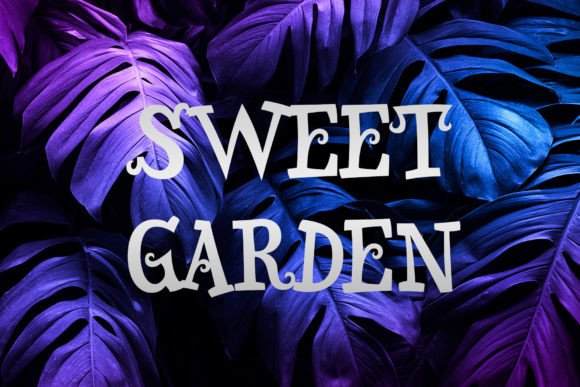
Sweet Garden Display Font for Handmade Creatives
It started with a candle label — one I’d sketched out on scrap paper, then opened in Canva to mock up. The scent was lavender-vanilla, the jar was matte white glass, and the vibe? Soft, dreamy, just a little magical. But the font felt off — too stiff, too common. That’s when I typed “Sweet Garden” into my font library and watched it appear: a display font that felt like stepping into a sun-dappled garden at twilight — whimsical and fun, yet somehow still mysterious. Sweet Garden isn’t shouting; it’s whispering charm, with gentle curves, delicate terminals, and a quiet confidence that makes every word feel intentional.
Sweet Garden for Wedding Invitations and Elegant Branding
Sweet Garden is a display font built for moments that deserve pause — like a hand-calligraphed welcome sign or the “Mr. & Mrs.” on a linen-wrapped invitation suite. I used it for a spring wedding’s digital RSVP card, pairing it with a clean sans serif for body text (think Montserrat Light or Inter), and the contrast elevated everything. Sweet Garden shines in titles, names, and short phrases — not paragraphs — so it’s perfect for save-the-dates, ceremony programs, and boutique-style thank-you tags. Because it’s a display font, it doesn’t need to carry long blocks of copy — it anchors emotion instead. When printed on textured cotton paper or foil-stamped, Sweet Garden adds perceived luxury without overcomplicating design.
Sweet Garden for Candle Labels and Small-Batch Packaging
For candle labels — especially those cut on Cricut or Silhouette machines — Sweet Garden delivers clarity *and* character at 14–18pt sizes. I tested it across three label stocks: matte sticker paper, kraft tag stock, and clear vinyl. At 16pt, the letterforms held their shape beautifully during cutting — no fragile serifs snapping off, no cramped counters collapsing. As a display font, Sweet Garden works best for product names (“Honeycomb Hush,” “Moonlit Thyme”) and short descriptors (“soy wax • hand-poured • small batch”). Avoid using it for ingredient lists or legal disclaimers — that’s where your go-to sans serif font earns its keep. Always check your font file includes OTF or TTF formats (not just web fonts) before prepping SVGs or print-ready PDFs.
Sweet Garden for Printable Wall Art and Digital Downloads
When designing printable wall art — think botanical quote prints, nursery name signs, or seasonal affirmations — Sweet Garden adds instant warmth and personality. I created a set of six “Garden Notes” planner pages (moon phase tracker, herb planting calendar, gratitude log), and used Sweet Garden only for headers and decorative accents. Its whimsical rhythm made each page feel cohesive but never childish. As a fonts asset in digital downloads, Sweet Garden helps buyers imagine their own version — whether they’re printing at home or sending to a local print shop. Just remember: include clear licensing notes in your listing. Sweet Garden is licensed for commercial use, so you’re covered for physical products and digital templates — but always verify the license covers resale of derivative designs (like editable Canva templates).
Sweet Garden for Greeting Cards and Handmade Stationery
Greeting cards live or die by first impression — and Sweet Garden makes yours linger. I designed a birthday card series with watercolor florals and used Sweet Garden for sentiments like “You’re Simply Wonderful” and “Wildly Loved.” Its mystery comes through in subtle details: the soft swell of the lowercase ‘g’, the looping tail of the ‘y’, the way uppercase letters balance elegance with approachability. As a display font, it’s not meant for long messages inside — but paired with a friendly handwritten font or airy serif for inner text, it creates visual hierarchy that feels handmade, not templated. For foil-stamped cards or letterpress runs, test spacing early: Sweet Garden benefits from slightly increased tracking (letter-spacing) to let its charm breathe.
Sweet Garden for Boutique Tags and Seasonal Product Labels
Those tiny kraft tags hanging from ceramic mugs, linen totes, or dried-flower bundles? Sweet Garden fits right in — especially at 10–12pt with tight but legible kerning. I used it for holiday gift tags (“Hand-Poured • Made With Love • Winter 2024”) and found it read clearly even when scaled down for laser-cut wood ornaments or embroidered patches. Its fun energy lifts traditionally rustic or minimalist branding, while its underlying mystery keeps it from feeling cutesy. As with all display fonts, avoid cramming too much text onto small surfaces — let Sweet Garden speak in fragments: a name, a season, a single evocative word. And if your font file includes stylistic alternates or swashes, try swapping the default ‘S’ or ‘G’ for something more distinctive in your logo lockup or shop banner.
Sweet Garden for Planner Pages and Creative Journal Designs
In planner pages — especially themed ones like “Botanical Bloom” or “Stargazer Weekly” — Sweet Garden acts like a quiet signature. I used it for weekly headers, habit tracker titles, and section dividers, always keeping it large enough to scan quickly (14pt minimum). Its readability on screen is strong, and it exports cleanly to PDF for digital planners. As a fonts choice for creative journal kits, Sweet Garden invites play: layer it over watercolor scans, pair it with simple line art, or use it as a focal point in mood board templates. Just be mindful of weight — most Sweet Garden files come in one upright style (no bold or italic variants), so lean into size, color, and placement to create emphasis instead.
Sweet Garden for Social Media Graphics and Shop Branding
Your Instagram story announcing a new candle drop? A Pinterest pin for your printable shop? Sweet Garden adds instant cohesion. I used it across my shop’s social assets — same font for product name overlays, same spacing rhythm in carousel slides, same playful-but-polished tone in Reels captions. As a display font, it performs well in vertical and square crops, and its whimsical-yet-mysterious quality helps your brand stand out in crowded feeds. Pair it with a neutral background and minimal iconography, and Sweet Garden becomes your visual shorthand — no logo needed. Just make sure your file includes full Unicode support if you plan to offer multilingual listings or inclusive name options in your templates.